
HQLA: High Quality Liquid Asset
Gold's regulatory classification debate
A High-Quality Liquid Asset (HQLA) is defined under the Basel III liquidity framework as an asset that can be easily and immediately converted into cash with little or no loss of value, even in times of stress. Tier 1 refers to capital rules established under Besel 1 in 1988. According to the US Federal Reserve, gold is not classified as HQLA. The regulatory agencies declined to designate gold bullion as a Level 1 liquid asset given due to concerns of logistical challenges associated with holding and liquidating the asset.
However, under the Basel Capital Accords, gold is classified as a Tier 1 asset with a 0% risk weight. The rules specify that gold held in a bank's own vault qualifies as a Tier 1 asset with a zero-risk weighting. According to Baur et al. (2025), gold meets all market-related criteria, namely high volume, negative correlation with risky assets during stress periods, relatively low volatility, and low bid-ask spreads.
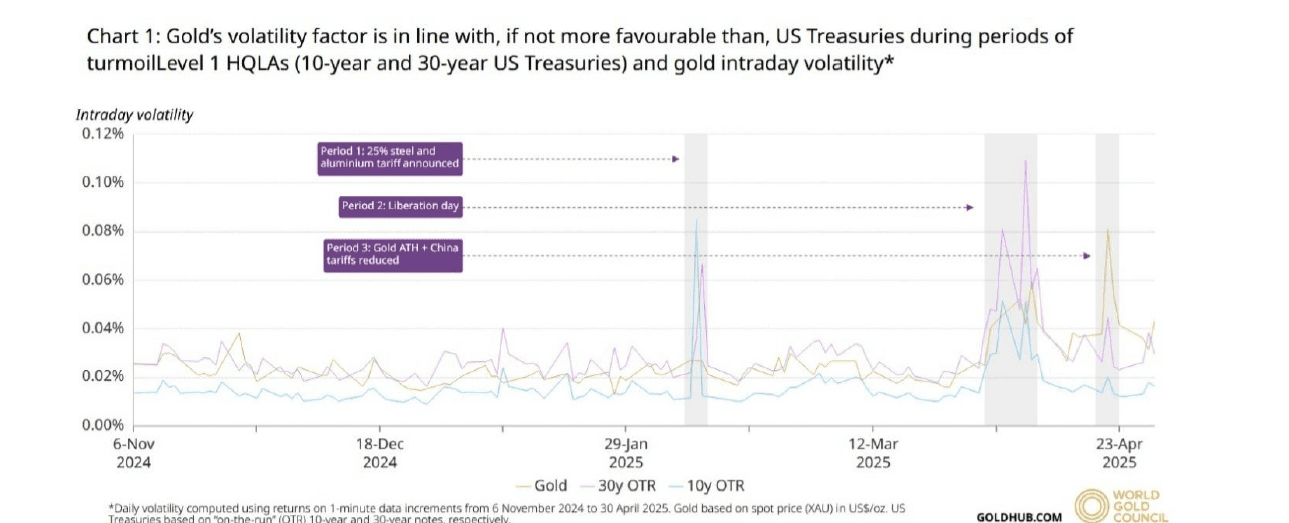
Chart 1: Intraday volatility comparison - Source: Bloomberg, World Gold Council (GOLDHUB.COM)
Oswin & Artigas (2025), note that gold's average daily volatility is 0.027%. This is higher than that of the 10-year Treasury notes at 0.016%, but in line with 30-year Treasury bonds at 0.028%.
Despite rumours circulating that gold would be reclassified as HQLA under Basel III effective July 1, 2025, the LBMA has clarified that this claim is incorrect and misleading. Basel Committee on Banking Supervision has not commented on this issue.
According to a report posted on Interactive brokers' website, about 30% of central banks say they plan to increase their gold holdings over the next 12 months. Global central banks added over 244 metric tons of gold to reserves in Q1 2025.
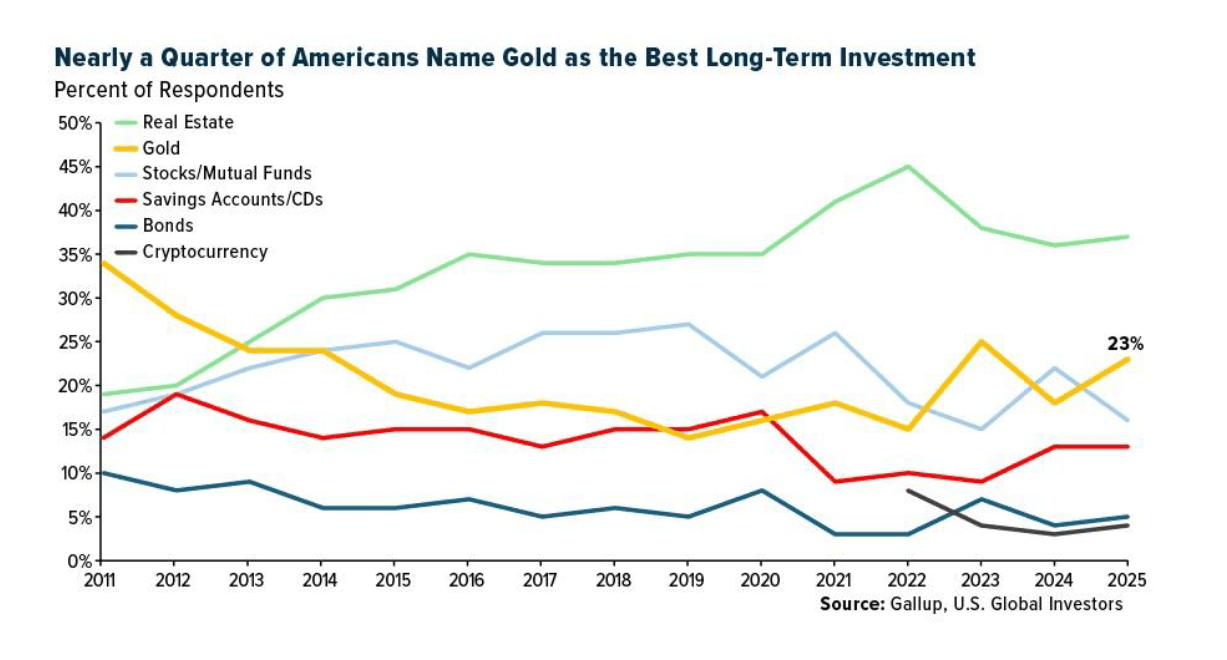
Source: Gallup, U.S. Global Investors
Sources
- https://www.federalregister.gov/documents/2014/10/10/2014-22520/liquidity-coverage-ratio-liquidity-risk-measurement-standards
- Baur et al. (2025) - SSRN Paper
Author: Strategyland Research Team